
By Raju Vernekar
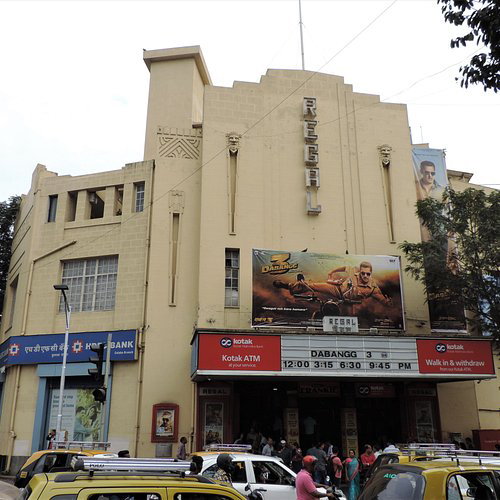
Mumbai: The Indian Motion Picture Producers’ Association (IMPPA), representing film and entertainment content producers across India, has opposed the proposed steep hike in theatre tax, by the Municipal Corporation of Greater Mumbai (BMC), saying that the film industry is already in recession due to fall in number of patrons.
The BMC has proposed a substantial increase in the Theatre Tax applicable to cinemas and other entertainment activities for the financial year 2027-28. The proposal includes an increase in the Theatre Tax from the existing Rs.60 to Rs 400 per show for Multiplex, Rs 60 to Rs 200 per show for AC Single Screen and Rs.45 to Rs 90 per show for Non-AC cinemas.
The above proposal has been referred back by the BMC’s Law Committee to the administration for reconsideration. In a letter to Maharashtra Chief Minister Devendra Fadnavis, dated October 08, 2026, the IMPPA has urged that before approving this proposal, the concerns of the film industry should be taken into account.
“The present Theatre Tax is a fixed levy payable for every show, which is payable irrespective of whether a particular show is full, partly occupied or has very low attendance. A cinema may have well-attended shows on weekends and holidays, but the same cinema may have very low occupancy during weekdays, particularly for smaller films, independent films, the films made by first-time producers and the films with limited theatrical demand.”.
The theatre tax is different from a levy that varies according to the actual revenue generated by a screening. The cinema exhibition sector is already operating in a challenging environment, with GST applicable on cinema admissions, rising operating costs, changing audience habits and increasing competition from digital platforms. Ultimately, the additional cost would have to be absorbed by exhibitors or recovered through the overall economics of cinema operations. This can put pressure on ticket prices and may, directly or indirectly, make cinema-going more expensive for audiences.
The effect of such an increase will also affect the producers whose depend upon the theatres to reach the patrons through the theatres. Producers invest substantial money, time and personal resources in making films, often without any certainty about viewers’ response. The small films and the films made by first-time producers, may not have the marketing strength or commercial scale of large productions. A substantial increase in the fixed amount payable for every show can add considerably to the cost of conducting a screening.
The cinemas contribute to the wider economy of Mumbai. They provide employment and support a large ecosystem involving technicians, theatre employees, projection and technical staff, security personnel, food and beverage outlets, transportation, parking, retail and several other allied activities. When cinema activity is affected, the impact is not confined to the producer or the theatre owner, it also reaches ordinary working people and their families. Healthy cinema footfalls therefore have an economic impact well beyond the cinema premises. As such the Maharashtra Government should reconsider the proposed substantial increase in the Theatre Tax and to retain the existing rates, IMPPA President Abhay Sinha urged the CM.
On line film piracy
The IMPPA has also taken up the issue of increasing online film piracy and unauthorized availability of films on Facebook and other digital platforms, with the Union Minister of Information and Broadcasting Ashwini Vaishnav.
In a letter to the minister, the IMPPA has pointed out that the films are being illegally distributed through websites, social media platforms, messaging services and other digital channels, causing direct loss of legitimate revenue to producers and other stakeholders. The impact is particularly severe on smaller and independent producers who may not have the financial or technical resources to continuously monitor multiple platforms and pursue individual infringements.
The piracy affects not only producers but the entire film industry. Substantial investments are made in the production and release of films, while actors, writers, directors, technicians, production workers, distributors, exhibitors and numerous other professionals depend upon the legitimate exploitation of film content for their livelihood.
The rapid growth of digital platforms has created new avenues for viewers to access legitimate content. At the same time, it has also created new avenues for unauthorized distribution. The industry therefore requires an effective and practical mechanism that keeps pace with these developments.
IMPPA therefore requests the Government to take appropriate measures to strengthen the fight against online film piracy, including better coordination with digital and social media platforms such as Facebook and Telegram for the prompt removal of unauthorized films, an effective mechanism for producers and copyright owners to report infringing links, uploads, pages, channels and websites and ensure timely action against repeat infringers and organized piracy networks. We urge the ministry to take up this matter with the concerned authorities to ensure stronger and more effective protection of the rights and interests of Indian film producers and copyright owners, Sinha stated.
Related Articles
Rs 370 crore recovered from developers towards compensation to homebuyers by MahaRERA
By Raju Vernekar Mumbai: October 15 : With the Maharashtra Government’s new comprehensive procedure and the assistance from the respective District Collectorates across the state, Maharashtra Real Estate Regulatory Authority (MahaRERA) has been able to recover Rs...
ICG apprehends a fishing boat smuggling diesel off Mumbai Coast
By Raju Vernekar Mumbai: In a swift and coordinated maritime operation, the Indian Coast Guard (ICG) apprehended an Indian Fishing Boat (IFB) “Haridwar Krupa”, suspected of engaging in illicit mid-sea diesel smuggling off the Mumbai coast on the night of Monday,...
Alleged misuse of foreign funds by NGOs is under the government scanner
By Raju vernekar While the new Foreign Contribution (Regulation) Amendment Rules and Bill of 2026 (FCRA Bill) have been referred to the Joint Parliament Committee (JPC) by the Lok Sabha, according to the central government, there have been instances of certain NGOs...